.png)
Complete Guide to WTP Services in Bangalore 2025: Installation, Maintenance & Compliance for Industries

Updated: Dec 11, 2025
Table of Contents
Understanding Water Treatment Plants in Bangalore
Water treatment plants have become essential infrastructure for Bangalore's industrial, commercial, and residential sectors. As India's Silicon Valley faces mounting water challenges, the demand for reliable water purification systems has surged dramatically. A water treatment plant systematically removes contaminants, impurities, and harmful substances from raw water sources to produce clean, safe water suitable for specific applications.
What is a Water Treatment Plant?
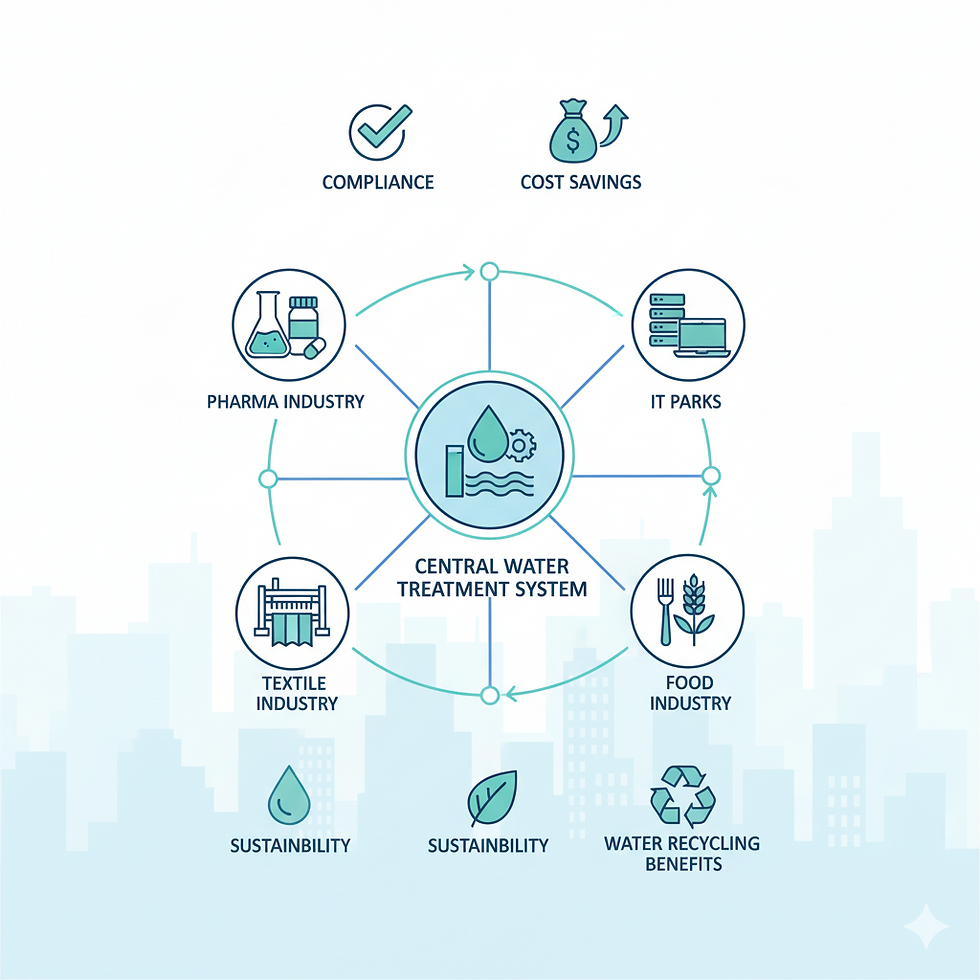
A water treatment plant is an integrated system designed to purify water through multiple stages of physical, chemical, and biological processes. The facility combines various technologies including filtration, sedimentation, disinfection, and advanced membrane processes to deliver water that meets stringent quality standards. In Bangalore's context, WTPs serve three primary purposes: providing potable drinking water, supplying process water for industries, and treating wastewater for safe discharge or reuse.
The technology backbone of modern WTPs includes reverse osmosis membranes, ultrafiltration systems, activated carbon filters, ion exchange resins, and UV disinfection units. Each component plays a specific role in removing different categories of contaminants ranging from suspended solids and dissolved minerals to microorganisms and organic compounds.
Bangalore's Water Quality Challenges
Bangalore's water quality presents unique challenges that necessitate sophisticated treatment solutions. The city's groundwater, which many industries rely upon, contains elevated levels of total dissolved solids, hardness minerals, fluoride, and occasionally heavy metals. Surface water sources like the Cauvery River require extensive treatment due to seasonal variations in turbidity and microbial content.
Recent data from the Karnataka State Natural Disaster Management Centre indicates that groundwater levels in 80 peripheral wards have dropped by 20 to 25 meters, forcing borewells to be drilled as deep as 1,500 feet compared to just 200-300 feet a decade ago. This depletion has resulted in water with higher mineral concentration, making treatment more complex and essential.
The water crisis has intensified regulatory oversight, with the Bangalore Water Supply and Sewerage Board implementing stricter quality monitoring and imposing penalties for non-compliance. Industries face mounting pressure to demonstrate responsible water usage through proper treatment and recycling.
Industrial Water Requirements in Bangalore
Different industrial sectors have varying water quality requirements. The pharmaceutical industry demands ultra-pure water with minimal ionic content, while textile manufacturers need soft water for dyeing processes. Food and beverage companies require water meeting stringent microbiological standards. IT parks and commercial buildings need reliable water supply for cooling towers, landscaping, and employee consumption.
Process industries in Peenya, Bommasandra, and Whitefield consume significant water volumes daily. Manufacturing facilities typically require water with specific parameters: pH between 6.5-8.5, total dissolved solids below 500 ppm for general purposes, and hardness levels under 200 ppm. Meeting these specifications without professional WTP services proves challenging given Bangalore's variable water quality.
Why WTP Services Are Critical for Bangalore Industries
The importance of professional WTP services extends far beyond simple water purification. Industries in Bangalore face a complex web of operational, regulatory, and economic factors that make expert water treatment essential.
Regulatory Compliance and Legal Requirements
The Karnataka State Pollution Control Board and BWSSB enforce stringent water quality regulations. Industries must obtain Consent to Establish and Consent to Operate, which mandate specific effluent parameters. Non-compliance results in hefty penalties ranging from ₹5,000 to ₹50,000, potential closure notices, and reputational damage.
The Water (Prevention and Control of Pollution) Act, 1974 requires industries to maintain detailed water quality records, conduct periodic testing, and submit compliance reports. Professional WTP service providers ensure continuous adherence to these regulations through systematic monitoring and documentation.
Recent amendments have made it mandatory for industrial units consuming more than 50,000 liters per day to install water meters and implement recycling systems. WTP services help industries navigate these evolving regulatory landscapes while maintaining operational continuity.
Cost Savings Through Water Recycling
Water costs in Bangalore have escalated dramatically. Tanker water prices have surged from ₹1,500 to ₹5,000-6,000 per tanker during peak summer months. Industries dependent on external water sources face unpredictable operational costs and supply disruptions.
Professional WTP services enable significant cost reduction through water recycling and reuse. Modern treatment plants can recover 75-85% of wastewater for non-potable applications like cooling towers, floor washing, landscaping, and process cooling. An industry consuming 100,000 liters daily can save ₹15-20 lakhs annually through effective water recycling.
Zero liquid discharge systems, increasingly popular among Bangalore industries, eliminate water disposal costs while generating reusable water. The initial investment in comprehensive WTP infrastructure typically achieves payback within 2-3 years through water cost savings alone.
Operational Reliability and Equipment Protection
Water quality directly impacts industrial equipment lifespan and operational efficiency. Hard water causes scaling in boilers, heat exchangers, and pipelines, reducing thermal efficiency by 15-30% and necessitating frequent maintenance. Dissolved iron and manganese stain products and damage membranes.
Properly treated water protects expensive capital equipment worth crores of rupees. A pharmaceutical facility's water-for-injection system, costing ₹50 lakhs to install, requires consistent feed water quality to maintain validation status. Food processing equipment demands microbiologically safe water to prevent contamination incidents that could shut down production.
Professional WTP services include continuous water quality monitoring, preventive maintenance schedules, and rapid response to quality deviations. This proactive approach minimizes production downtime and prevents costly equipment failures.
Sustainability and Corporate Social Responsibility
Bangalore's acute water scarcity demands that industries demonstrate environmental stewardship. Consumers, investors, and regulatory bodies increasingly scrutinize corporate water footprints. Industries with robust water treatment and recycling programs enhance their sustainability credentials and corporate reputation.
Many multinational companies have established water-positive goals, requiring operations to return more water to the community than consumed. Achieving these objectives necessitates advanced WTP capabilities including wastewater treatment, rainwater harvesting integration, and groundwater recharge systems.
Professional WTP service providers help industries quantify water conservation metrics, prepare sustainability reports, and achieve green building certifications like IGBC and LEED that mandate water efficiency measures.
Types of Water Treatment Plants Available
Bangalore industries can choose from various WTP configurations based on source water quality, end-use requirements, capacity needs, and budget considerations.
Reverse Osmosis (RO) Plants
RO technology dominates industrial water treatment due to its versatility and effectiveness. The process forces water through semi-permeable membranes under pressure, removing 95-99% of dissolved salts, minerals, bacteria, and organic compounds.
RO plants range from compact 500 LPH units for small laboratories to massive 50,000 LPH systems for large industries. The technology excels at treating high TDS groundwater common in Bangalore, reducing 2000 ppm feed water to below 50 ppm product water.
Key components include multimedia filters for suspended solids removal, activated carbon filters for chlorine reduction, antiscalant dosing systems, high-pressure pumps, and RO membranes. Modern plants incorporate energy recovery devices reducing power consumption by 30-40%.
Industries requiring ultra-pure water often combine RO with additional polishing steps like mixed-bed deionization, producing water with resistivity exceeding 15 megohm-cm. Pharmaceutical, electronics, and laboratory applications depend on these multi-stage systems.
Ultrafiltration (UF) Plants
Ultrafiltration employs hollow fiber membranes with pore sizes of 0.01-0.1 microns, effectively removing bacteria, viruses, colloids, and suspended solids while allowing dissolved minerals to pass. UF serves as excellent pretreatment for RO systems or standalone treatment for low TDS water sources.
The technology operates at lower pressures than RO, consuming less energy. Bangalore industries use UF for surface water treatment, tertiary wastewater treatment, and as RO pretreatment to extend membrane life. The systems handle turbidity fluctuations better than conventional filtration.
UF plants typically include intake screens, chemical dosing for coagulation, UF membrane modules, backwash systems, and clean-in-place equipment. The membranes require periodic cleaning but generally last 5-7 years with proper maintenance.
Demineralization (DM) Plants
DM plants remove virtually all ionic impurities through ion exchange resins, producing water suitable for boiler feed, battery manufacturing, and other applications requiring minimal conductivity. The process passes water through cation and anion exchange columns that capture charged particles.
Two-bed DM plants use separate strong acid cation and strong anion resin beds, while mixed-bed systems combine resins in a single vessel for higher purity. Bangalore industries typically choose two-bed systems for routine applications and mixed-bed for critical processes.
The resins require periodic regeneration using hydrochloric acid and caustic soda. Modern DM plants incorporate automated regeneration sequences, reducing chemical consumption and operator involvement. Service providers offer comprehensive AMC packages including resin replacement, valve servicing, and regenerant supply.
Water Softening Plants
Softeners remove hardness-causing calcium and magnesium ions through ion exchange, preventing scale formation in boilers, cooling towers, and process equipment. The technology uses strong acid cation resin in sodium form, exchanging hardness ions for sodium.
Bangalore's hard groundwater makes softening essential for most industrial applications. Softeners range from 500-liter manual units to 50,000-liter fully automatic systems with PLC control. The choice depends on water hardness, flow rate requirements, and automation preferences.
Softener operation involves service cycle, backwash, brine draw, slow rinse, and fast rinse phases. Salt-based regeneration occurs every 8-12 hours depending on water hardness and resin capacity. Professional service includes salt supply, brine tank cleaning, resin replacement, and control valve maintenance.
Integrated Multi-Stage WTP Systems
Large industries often require integrated systems combining multiple technologies. A typical configuration might include sand filtration, activated carbon filtration, water softening, RO, and UV disinfection in sequence. Each stage addresses specific contamination categories.
These comprehensive systems handle variable feed water quality, achieving consistent product water specifications. The design incorporates redundancy for critical stages, ensuring continuous operation during maintenance. Automation systems monitor quality parameters and automatically adjust chemical dosing and flow rates.
Professional WTP service providers design these systems through detailed water analysis, process simulation, and capacity planning. They consider future expansion possibilities, budget constraints, and operator skill levels during configuration selection.
Complete WTP Installation Process
Professional WTP installation follows a systematic methodology ensuring optimal performance, regulatory compliance, and long-term reliability.
Phase 1: Site Assessment and Water Analysis
The installation process begins with comprehensive site evaluation. Engineers assess available space, electrical infrastructure, drainage provisions, and access for equipment delivery and maintenance. Foundation requirements vary based on equipment weight and vibration characteristics.
Detailed water analysis forms the cornerstone of system design. Laboratories test raw water for pH, turbidity, total dissolved solids, hardness, alkalinity, chloride, sulphate, iron, fluoride, nitrate, bacterial contamination, and heavy metals. Seasonal variations require testing during different periods to capture worst-case scenarios.
The analysis identifies specific contaminants requiring removal and appropriate treatment technologies. High TDS levels indicate RO necessity, while elevated hardness suggests softening requirements. Bacterial presence mandates disinfection systems. This data drives accurate system sizing and component selection.
Phase 2: System Design and Engineering
Engineers prepare detailed system layouts showing equipment placement, piping routes, electrical connections, and instrumentation points. The design considers operator access for maintenance, valve accessibility, and sample collection locations.
Hydraulic calculations determine pipe sizes, pump specifications, and pressure requirements at each stage. Electrical load calculations ensure adequate power supply with appropriate protection devices. Chemical storage and dosing systems receive special attention for safety and efficiency.
The design phase produces detailed drawings, equipment specifications, bill of materials, and installation timelines. Clients receive comprehensive documentation for review and regulatory approvals before procurement begins.
Phase 3: Equipment Procurement and Quality Assurance
Reputable WTP service providers source equipment from established manufacturers with proven track records. RO membranes from brands like Dow, Hydranautics, or Toray ensure reliable performance. Pumps from Grundfos or Kirloskar offer durability and efficiency.
Quality control includes factory acceptance testing of major equipment before dispatch. Membrane integrity testing, pump performance curves verification, and control system functionality checks prevent installation surprises. Proper packaging and transportation arrangements protect sensitive components.
Component selection balances initial cost with lifecycle expenses. Premium components might cost 20-30% more upfront but deliver superior performance, longer life, and lower maintenance costs over 10-15 year operational periods.
Phase 4: Civil and Mechanical Installation
Installation commences with civil works including foundation construction, sump excavation, pipe trenching, and chemical storage tank bases. Proper foundations prevent vibration issues and equipment misalignment.
Mechanical installation positions equipment per approved layouts, connecting pipes, valves, and instruments systematically. Stainless steel piping for product water and UPVC for raw water ensure corrosion resistance. All connections undergo pressure testing before system commissioning.
Electrical work includes motor starters, control panels, sensors, and automation systems installation. Safety features like emergency stops, overload protection, and leak detection systems receive priority attention. Proper grounding prevents electrical hazards.
Phase 5: Testing, Commissioning, and Validation
Pre-commissioning checks verify all mechanical and electrical connections, valve positions, and instrumentation calibration. The system undergoes flushing to remove construction debris and preserve membrane integrity.
Commissioning proceeds in stages: raw water pump operation, filtration system testing, membrane flushing, and finally full system operation at design capacity. Water quality testing at each stage confirms performance specifications achievement.
Pharmaceutical and food industries require extensive validation protocols documenting installation qualification, operational qualification, and performance qualification. Service providers prepare comprehensive validation reports meeting regulatory requirements.
Phase 6: Operator Training and Documentation
Successful WTP operation requires properly trained personnel. Service providers conduct hands-on training covering system startup, shutdown, routine monitoring, troubleshooting, and emergency procedures. Training materials include operation manuals, maintenance schedules, and safety protocols.
Complete documentation packages include as-built drawings, equipment datasheets, warranty certificates, operation manuals, maintenance schedules, spare parts lists, and vendor contact information. This documentation proves invaluable during future maintenance and regulatory inspections.
WTP Maintenance and AMC Services
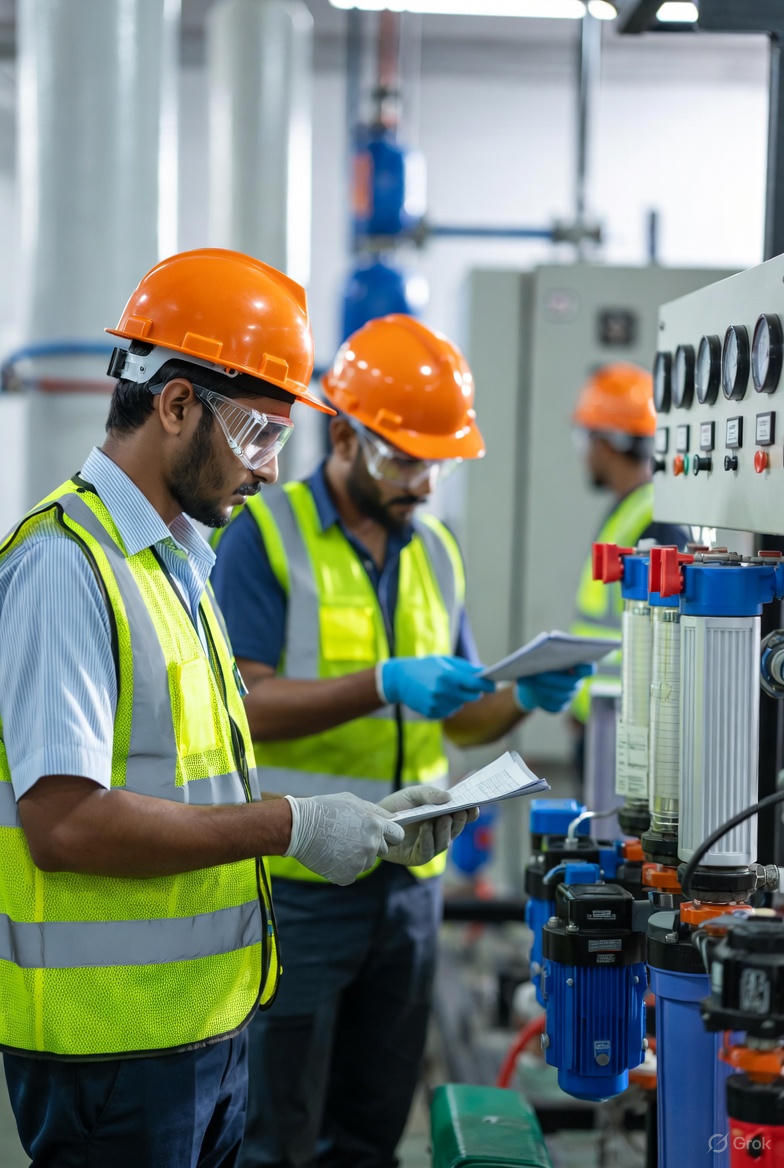
Regular maintenance determines WTP longevity, performance consistency, and operational costs. Professional Annual Maintenance Contract services provide comprehensive care programs.
Preventive Maintenance Schedules
Systematic preventive maintenance prevents unexpected failures and extends equipment life. Daily activities include visual inspections, pressure gauge monitoring, and water quality testing. Weekly tasks cover filter backwashing, chemical tank level checks, and membrane performance assessment.
Monthly maintenance includes detailed inspections of pumps, valves, and motors. Quarterly schedules involve chemical cleaning of membranes, resin bed checks in softeners and DM plants, and control system calibration. Annual activities encompass major overhauls, resin replacement, and membrane replacement as needed.
Service providers maintain detailed maintenance logs documenting all activities, observations, and corrective actions. This historical data helps predict failure patterns and optimize maintenance intervals.
Critical Components Requiring Regular Attention
RO membranes represent the most critical and expensive components. Proper pretreatment protects membranes from fouling and scaling. Regular cleaning every 3-6 months maintains flux rates and salt rejection performance. Membrane life typically ranges from 3-5 years with proper care.
Filters require periodic media replacement. Activated carbon loses adsorption capacity after 12-18 months. Sand and anthracite media need replacement every 2-3 years. Cartridge filters require monthly replacement depending on feed water quality.
Pumps need bearing lubrication, seal inspection, and coupling alignment checks. High-pressure pumps working 12-16 hours daily require quarterly maintenance. Control valves undergo similar scrutiny to prevent leakage and ensure proper operation.
Water Quality Monitoring and Testing
Continuous monitoring ensures consistent product water quality. Online instruments measure pH, conductivity, turbidity, and flow rates providing real-time performance feedback. Deviation alarms alert operators to potential problems.
Regular laboratory testing verifies online instrument accuracy and assesses parameters not continuously monitored. Monthly testing includes comprehensive chemical analysis. Microbiological testing frequency depends on water use: weekly for food industry, monthly for others.
Professional AMC services include laboratory testing, trending analysis, and regulatory compliance reporting. This systematic approach identifies gradual performance degradation before it impacts operations.
Emergency Breakdown Services
Equipment failures occur despite preventive maintenance. Professional service providers offer 24/7 emergency response with guaranteed response times. Well-stocked spare parts inventories minimize downtime during breakdowns.
Common emergency situations include membrane fouling requiring immediate chemical cleaning, pump failures necessitating replacement, and control system malfunctions requiring expert troubleshooting. Experienced technicians diagnose problems rapidly and implement effective solutions.
AMC agreements typically specify maximum response times (4-6 hours), repair completion targets, and backup equipment availability. Premium contracts include loaner equipment for critical failures requiring extended repairs.
AMC Package Options and Pricing
Service providers offer tiered AMC packages suiting different requirements and budgets. Basic packages cover preventive maintenance visits and routine consumables. Comprehensive packages include all parts, labor, consumables, and emergency services.
Typical AMC costs range from 8-12% of WTP capital cost annually for comprehensive coverage. A ₹25 lakh WTP might have an AMC of ₹2.5-3 lakhs annually. This investment prevents costly breakdowns and ensures optimal performance.
Premium packages often include performance guarantees, water quality commitments, and replacement equipment during major repairs. Industries valuing operational continuity select these comprehensive contracts despite higher costs.
BWSSB Compliance and Regulatory Requirements
Operating industrial water treatment facilities in Bangalore requires navigating complex regulatory frameworks. Understanding and maintaining compliance prevents legal troubles and operational disruptions.
BWSSB Registration and Approvals
Industries must register their water sources and treatment facilities with BWSSB. The registration process requires detailed information about water consumption, source types (tanker, borewell, Cauvery connection), treatment capacity, and end uses.
New installations require Building Plan Approval showing WTP location, capacity, and integration with building services. Industries consuming more than 50,000 liters daily must install water meters and submit monthly consumption reports.
BWSSB conducts periodic inspections verifying reported data accuracy. Discrepancies result in penalties and potential supply disconnection for Cauvery connections. Professional service providers assist with registration procedures and documentation.
Karnataka Pollution Control Board Requirements
The Karnataka State Pollution Control Board oversees industrial effluent discharge. Industries must obtain Consent to Establish before WTP installation and Consent to Operate before commissioning. These consents specify discharge limits, monitoring frequencies, and reporting requirements.
Application procedures require detailed project reports including process flow diagrams, treatment system descriptions, expected influent and effluent quality, disposal methods, and emergency response plans. The process takes 2-3 months for straightforward applications.
Professional service providers prepare consent applications, ensuring technical accuracy and regulatory compliance. They maintain relationships with pollution control officials facilitating smoother approval processes.
Effluent Discharge Standards
Industries must meet stringent effluent standards before discharging treated water into municipal sewers or water bodies. Key parameters include pH (6.5-8.5), biochemical oxygen demand (below 30 mg/L), chemical oxygen demand (below 250 mg/L), total suspended solids (below 100 mg/L), and oil and grease (below 10 mg/L).
Heavy metal limits vary by industry type but generally prohibit detectable quantities of mercury, chromium VI, arsenic, and lead. Discharge temperature must not exceed 40°C. Violating these standards results in prosecution and facility closure.
Professional WTP services include effluent testing schedules, treatment optimization to meet standards, and documentation for regulatory reporting. This systematic approach ensures consistent compliance.
Zero Liquid Discharge Mandates
Recent regulations mandate zero liquid discharge for industries in water-stressed areas. These facilities must treat all wastewater to standards allowing reuse or evaporate concentrates rather than discharge.
Implementing ZLD requires sophisticated treatment technologies including RO, multi-effect evaporators, and crystallizers. The capital investment increases significantly but eliminates discharge-related regulatory risks and water disposal costs.
Service providers help industries evaluate ZLD feasibility, design appropriate systems, and navigate regulatory approvals. Many Bangalore industries have successfully implemented ZLD, becoming models for sustainable water management.
Documentation and Reporting Requirements
Regulatory compliance demands meticulous record-keeping. Industries must maintain daily water consumption logs, quality testing records, maintenance activities documentation, and chemical usage registers. These records must be available for inspection.
Monthly reports to BWSSB detail water consumption from various sources, treatment volumes, recycling quantities, and discharge volumes. Annual environmental statements to pollution control boards summarize water management performance.
Professional AMC services include documentation support, report preparation, and regulatory correspondence management. This relieves industries of administrative burden while ensuring compliance.
Cost Analysis of WTP Services
Understanding the complete cost structure helps industries make informed decisions about WTP investments and service provider selection.
Capital Investment for WTP Installation
WTP installation costs vary widely based on capacity, technology complexity, and automation levels. A basic 1,000 LPH RO plant for a small industry costs ₹4-6 lakhs including installation. A 10,000 LPH integrated system with advanced automation costs ₹35-50 lakhs.
Pharmaceutical-grade systems command premium pricing due to stringent material requirements, validation needs, and documentation. A 5,000 LPH water-for-injection system costs ₹40-60 lakhs compared to ₹15-20 lakhs for industrial RO of similar capacity.
Civil works including sumps, pipe laying, and electrical infrastructure add 15-25% to equipment costs. Site conditions significantly impact civil expenses. Confined urban locations with access limitations increase installation costs substantially.
Operating and Maintenance Costs
Operating costs include electricity, chemicals, consumables, and maintenance labor. Electricity represents the largest component: a 10,000 LPH RO plant consumes 15-20 units per hour of operation. At ₹8 per unit, electricity costs ₹1.5-2 lakhs monthly for 12-hour daily operation.
Chemical costs cover antiscalants, pH adjusters, membrane cleaners, and disinfectants. Monthly chemical expenses range from ₹5,000 for small plants to ₹50,000 for large facilities. Softener salt costs ₹5-8 per kg with consumption of 150-200 kg per regeneration cycle.
Consumables including cartridge filters, UV lamps, and membrane elements require periodic replacement. Annual consumable costs typically run 3-5% of capital investment.
Labor costs depend on automation levels: fully manual systems need dedicated operators while automated plants require periodic supervision.
AMC and Service Charges
Professional AMC charges vary by coverage levels and WTP complexity. Basic annual contracts covering quarterly preventive maintenance cost ₹60,000-1,00,000 for small RO plants. Comprehensive contracts including all parts and consumables cost ₹1.5-2.5 lakhs for 5,000 LPH systems.
Large industrial systems with multiple technologies require correspondingly higher AMC investments. A 50,000 LPH integrated facility might have annual AMC charges of ₹6-8 lakhs for comprehensive coverage.
Emergency service charges outside AMC scope range from ₹5,000-15,000 per visit depending on problem complexity and parts requirements. Premium service providers offering 4-hour response times charge higher rates but minimize production downtime.
Cost-Benefit Analysis and ROI
Industries should evaluate WTP investments considering total lifecycle costs and benefits. Water cost savings through recycling provide direct financial returns. A facility consuming 100,000 liters daily, recycling 70%, saves 70,000 liters worth ₹3,500-7,000 daily at current tanker rates.
Annual water cost savings of ₹15-25 lakhs easily justify ₹40-50 lakh WTP investments, achieving payback within 2-3 years. Additional benefits include equipment protection (preventing ₹10-15 lakh scaling damage annually), production quality improvement, and regulatory compliance (avoiding ₹50,000-5,00,000 penalties).
Intangible benefits include enhanced corporate reputation, improved employee satisfaction from safe drinking water availability, and business continuity during water scarcity periods. Forward-thinking industries view WTP as strategic infrastructure rather than operational expense.
Financing Options and Government Subsidies
Several financing options facilitate WTP investments. Equipment vendors offer payment plans with 20-30% down payment and 12-36 month terms at 10-14% interest rates.
Commercial banks provide term loans for environment protection equipment at preferential rates.
Government schemes including the Credit Linked Capital Subsidy Scheme provide 15% capital subsidy for technology upgrades by MSMEs. The National Clean Energy Fund supports water efficiency projects. Industries should explore these programs reducing net investment requirements.
Choosing the Right WTP Service Provider
Selecting the appropriate WTP service partner significantly impacts system performance, operational costs, and long-term satisfaction.
Key Selection Criteria
Experience in relevant industries forms the primary selection criterion. Providers with pharmaceutical experience understand validation requirements, while those serving food industries appreciate microbiological challenges. Review provider portfolios and reference installations.
Technical competence separates competent providers from mediocre ones. Evaluate engineering capabilities through discussions about system design rationales, component selection justifications, and troubleshooting approaches. Request detailed proposals demonstrating understanding of specific requirements.
Financial stability ensures long-term support availability. Providers going out of business leave customers stranded during equipment failures. Review financial statements, years in business, and customer base size indicating stability.
Evaluating Company Credentials
Look for ISO certifications including ISO 9001 for quality management and ISO 14001 for environmental management. These demonstrate systematic organizational processes. Industry-specific certifications like ASME stamps for pressure vessels indicate technical capabilities.
Professional memberships in organizations like the Indian Water Works Association or Indian Institute of Chemical Engineers suggest industry engagement. Review case studies, published papers, and speaking engagements demonstrating thought leadership.
Government approvals including pollution control board empanelment and BWSSB approved vendor status provide confidence. These agencies conduct due diligence before empaneling service providers.
Assessing Technical Capabilities
Visit the provider's existing installations observing system conditions, operator satisfaction, and water quality achievement. Well-maintained systems with happy customers indicate competent service.
Discuss emergency response capabilities including technician availability, spare parts inventories, and backup equipment access. Request response time commitments in writing with penalty clauses for non-performance.
Evaluate ongoing research and development investments. Providers incorporating new technologies and energy-efficient solutions deliver better long-term value than those using outdated approaches.
Understanding Service and Support Structure
Clarify service team structures distinguishing between dedicated account managers, field technicians, and back-office support. Understand escalation procedures for unresolved issues.
Review AMC scope thoroughly understanding included services, excluded items, response time commitments, and pricing structures. Compare multiple proposals on equivalent terms.
Investigate training provisions for client personnel. Comprehensive training empowers operators reducing dependency on external support for routine issues.
Comparing Proposals and Pricing
Develop evaluation matrices comparing proposals across technical specifications, service terms, pricing, and intangibles. Avoid lowest-price selection without considering quality and service factors.
Request detailed price breakdowns distinguishing equipment costs from installation, commissioning, training, and warranty support. Hidden costs often emerge during execution with inadequately detailed proposals.
Negotiate payment terms protecting interests through milestone-based payments tied to installation progress and performance achievement. Withhold 10-15% pending successful trial run completion.
Reading Customer Reviews and References
Directly contact reference customers understanding real-world experiences. Ask about responsiveness during emergencies, technical competence, billing practices, and overall satisfaction.
Review online testimonials and social media presence. Consistent positive feedback across multiple platforms indicates reliable service. Investigate complaint resolutions demonstrating commitment to customer satisfaction.
Trust instincts developed through interactions with sales and technical teams. Professional, knowledgeable, and responsive providers during sales typically maintain these standards post-sale.
Common WTP Problems and Solutions
Understanding frequent WTP issues and their resolutions helps maintain optimal system performance and minimize downtime.
Low RO Permeate Flow Issues
Declining RO output indicates membrane fouling or scaling. Symptoms include reduced permeate flow while maintaining operating pressure, or requiring increased pressure to maintain flow.
Fouling results from inadequate pretreatment allowing suspended solids, organics, or microbiological growth on membrane surfaces. Scaling occurs when sparingly soluble salts like calcium carbonate, sulfate, or silica precipitate on membranes.
Solutions include improving pretreatment through additional filtration stages or enhanced backwashing. Chemical cleaning using appropriate agents (acids for scaling, alkaline solutions for organic fouling) restores membrane performance. Severe cases require membrane replacement.
Prevention involves rigorous pretreatment, proper antiscalant dosing, regular cleaning schedules, and maintaining recommended operating parameters. Water analysis guides antiscalant selection and dosing rates.
High Permeate TDS Problems
Elevated product water TDS suggests membrane damage, o-ring failure, or inadequate pressure. Normal RO membranes reject 95-99% of dissolved solids; rejection below 90% requires investigation.
Physical inspection identifies damaged membrane elements or failed o-rings allowing feed water bypass. Pressure gauge readings below design parameters indicate pump problems or valve malfunctions reducing driving force.
Replace damaged membranes and failed o-rings. Verify pump performance and adjust operating pressure. Chemical cleaning sometimes improves rejection for membranes with reversible fouling rather than physical damage.
Maintain proper pretreatment preventing membrane damage. Monitor rejection rates weekly detecting problems early before they become severe. Replace membranes proactively every 3-5 years rather than waiting for complete failure.
Water Softener Hardness Breakthrough
Hard water escaping softeners despite regeneration indicates resin exhaustion, channeling, or inadequate regeneration. Symptoms include scale formation on equipment despite softener operation.
Insufficient regeneration due to inadequate salt supply, incorrect brine concentration, or insufficient contact time prevents complete resin conversion to sodium form. Resin fouling by iron, organics, or bacterial growth reduces ion exchange capacity.
Verify brine system operation ensuring proper salt dissolution and delivery. Increase regeneration frequency or brine strength. Chemically clean resin using appropriate agents (citric acid for iron, chlorine for organics). Replace resin if severely fouled or beyond normal life expectancy.
Prevent issues through proper pretreatment removing iron before softening. Maintain adequate salt inventories and clean brine tanks regularly. Monitor water hardness continuously detecting breakthrough early.
DM Plant Low Resistivity Issues
DM plant product water should exceed 1-10 megohm-cm resistivity depending on application. Low resistivity indicates incomplete deionization from exhausted resins, regeneration problems, or contamination.
Premature resin exhaustion results from higher-than-expected feed water ionic load or inadequate resin capacity. Incomplete regeneration from insufficient acid or caustic quantities leaves residual ions on resins.
Regenerate resins more frequently or increase regenerant quantities. Replace exhausted resins if beyond capacity. Verify feed water quality ensuring proper pretreatment. Mixed-bed polishing improves water quality when two-bed systems prove inadequate.
Implement conductivity monitoring on individual beds identifying which stage causes problems. Maintain comprehensive regeneration logs detecting patterns indicating needed adjustments.
UV System Failure
UV disinfection systems fail when lamps lose intensity, quartz sleeves foul, or electrical components malfunction. Symptoms include microbiological contamination despite UV operation.
UV lamp intensity declines over time, typically requiring replacement every 9-12 months regardless of operation status. Mineral deposits on quartz sleeves block UV transmission reducing effectiveness even with functioning lamps.
Replace UV lamps annually per manufacturer recommendations. Clean quartz sleeves monthly using acid solutions removing mineral deposits. Verify electrical ballast operation and power supply consistency.
Install UV intensity monitors providing real-time performance feedback. Implement automatic alarms alerting to low intensity before complete disinfection failure. Maintain properly treated water feeding UV systems preventing rapid fouling.
Pump Cavitation and Failure
Pump problems manifest as unusual vibrations, noise, reduced flow, or complete failure. Cavitation occurs when suction pressure drops below liquid vapor pressure causing bubble formation and subsequent collapse damaging impellers.
Insufficient Net Positive Suction Head available compared to required NPSH causes cavitation. Blocked suction strainers, low sump levels, or high suction lift contribute. Seal failures result from improper installation, dry running, or normal wear.
Install pumps below water level where possible improving NPSH. Clean suction strainers regularly. Replace mechanical seals showing leakage. Balance impellers preventing vibration damage to bearings.
Implement low-level protection preventing dry running. Install pressure gauges monitoring suction and discharge pressures. Schedule regular bearing lubrication and seal inspection preventing premature failures.
Future of Water Treatment in Bangalore
Bangalore's water sector is experiencing transformative changes driven by technology advancement, regulatory evolution, and growing water scarcity awareness.
Smart Water Management Technologies
Internet of Things integration is revolutionizing WTP operations. Smart sensors continuously monitor water quality parameters, equipment performance, and energy consumption providing real-time data. Cloud-based platforms enable remote monitoring and predictive maintenance.
Machine learning algorithms analyze historical data predicting membrane cleaning requirements, optimizing chemical dosing, and forecasting maintenance needs. These systems reduce operational costs by 15-20% while improving water quality consistency.
Bangalore industries are increasingly adopting smart water meters tracking consumption patterns and detecting leaks. The Karnataka government has allocated significant funds for smart water infrastructure supporting this transformation.
Advanced Treatment Technologies
Emerging technologies promise more efficient and sustainable water treatment. Forward osmosis systems operate without high pressure reducing energy consumption significantly. Membrane distillation enables treating highly saline water unsuitable for conventional RO.
Graphene-based membranes show potential for dramatically higher flux rates and better fouling resistance. Nanotechnology applications in water treatment are moving from laboratory to commercial deployment.
Biological treatment advances including moving bed biofilm reactors and membrane bioreactors offer compact, efficient solutions for wastewater treatment. These technologies integrate well with existing infrastructure.
Zero Liquid Discharge Adoption
ZLD implementation is accelerating in Bangalore. The technology eliminates liquid discharge through extensive recovery and concentrate evaporation. While capital-intensive, ZLD provides ultimate water security and regulatory peace of mind.
Innovations in ZLD including mechanical vapor recompression and solar evaporation reduce operational costs. Industries in Peenya and Whitefield are implementing ZLD systems setting examples for others.
Government incentives for ZLD adoption including subsidies and preferential treatment in environmental clearances are driving growth. Professional service providers develop turnkey ZLD solutions making adoption accessible.
Sustainability and Circular Economy
Water treatment is embracing circular economy principles. Treated wastewater provides irrigation water, groundwater recharge, and industrial process water. Resource recovery from concentrate streams yields valuable minerals.
Bangalore's Million Wells project, creating groundwater recharge structures citywide, integrates with industrial water management. Industries contribute to this initiative through treated water discharge into recharge wells.
Energy-efficient treatment technologies including renewable energy integration reduce carbon footprints. Solar-powered WTP systems are becoming economically attractive as grid power costs escalate.
Regulatory Evolution
Regulations continue tightening as water scarcity intensifies. Industries expect mandatory water audits, progressive pricing structures penalizing excessive consumption, and stricter recycling mandates.
Digital reporting systems will replace paper-based compliance. Real-time data sharing with regulatory bodies through automated systems becomes standard practice.
Professional service providers adapting to these regulatory changes provide strategic advantages. Their expertise in navigating evolving compliance requirements protects industries from legal troubles while optimizing water management.
Conclusion
Water treatment plant services have become indispensable for Bangalore's industrial ecosystem. As the city grapples with acute water scarcity, professional WTP solutions provide operational continuity, regulatory compliance, and environmental sustainability.
Industries must view WTP investment strategically rather than as operational expense.
The comprehensive benefits—water cost savings, equipment protection, regulatory compliance, and corporate reputation enhancement—far exceed initial capital requirements.
Selecting the right WTP service provider determines long-term success. Companies like SZ WaterLinks bring extensive experience, technical expertise, and comprehensive service capabilities ensuring optimal system performance throughout operational life.
The future of Bangalore's water management lies in smart technologies, advanced treatment processes, and circular economy approaches. Industries embracing these trends position themselves for sustainable success amid growing water challenges.
Invest in professional WTP services today securing water independence tomorrow. Contact experienced providers, conduct thorough due diligence, and implement robust water management systems. Bangalore's industrial future depends on responsible water stewardship practices starting now.
About SZ WaterLinks:
SZ WaterLinks Private Limited is Bangalore's trusted water treatment solutions provider with 10+ years of expertise. We specialize in designing, installing, and maintaining RO plants, WTPs, STPs, and DM plants for industrial, commercial, and residential applications. Our advanced systems, quality components, and professional service ensure pure water, regulatory compliance, and long-term performance. Visit www.szwaterlinks.com or call for customized water treatment solutions.
Related Services:
RO Plant Installation and Maintenance
Sewage Treatment Plant Services
DM Plant Setup and AMC
Water Softener Maintenance
Zero Liquid Discharge Systems
Industrial Water Treatment Solutions
Service Areas: Bangalore, Peenya, Whitefield, HSR Layout, Koramangala, Electronic City, Bommasandra, Yeshwanthpur, and all industrial areas across Karnataka. About The Author:
Masood Khan, Founder & Director of SZ Waterlinks Pvt Ltd, brings 15 years of expertise in STP O&M, installation, compliance, and wastewater management across Bangalore.


Comments